Concrete cancer sometimes called concrete spalling threatens many mid-century and late-twentieth-century apartment buildings that line the beaches from Main Beach to Coolangatta. The Gold Coast enjoys sun, surf and a relaxed lifestyle yet the same sea breeze that draws residents also carries chloride ions that attack the steel hidden inside reinforced concrete. When committees delay action the damage spreads and levies rise. This guide explains how the problem starts, how engineers fix it, what projects really cost on the Coast and how Queensland body corporate law decides who pays.
What is concrete cancer and what is spalling
Concrete cancer describes progressive corrosion of the steel reinforcement that gives concrete its tensile strength. Concrete provides an alkaline environment that normally protects the steel. Once water oxygen and salts penetrate through cracks or porosity the alkaline guard drops and the steel begins to rust. Rust occupies far more volume than virgin steel so it expands and pushes outward against the surrounding concrete. The outward force creates cracks that let in even more moisture. Pieces then break away in flakes or chunks. That breaking is called spalling. Spalling is the visible symptom while concrete cancer is the underlying disease.
Spalling can appear as small bubbles under paint, thin hairline cracks at balcony edges or dramatic slabs of concrete that detach and fall to the ground. Despite the dramatic name early-stage concrete cancer can remain hidden for years behind render or tiles. Owners often discover it only when brown rust stains bleed through paint or when an inspection hammer test reveals hollow sounding patches.
Why coastal Gold Coast apartments are vulnerable
The Gold Coast sits on a narrow coastal plain where almost every high-rise is within a kilometre of the surf. Sea spray and humid onshore winds deposit chlorides onto facades day and night. Buildings constructed in the nineteen seventies and eighties used concrete mixes and waterproofing standards that fall short of current codes. Concrete cover over reinforcement was often thinner than modern requirements and some contractors used river sand that already contained salt.
Salt contamination accelerates corrosion in three ways. Chlorides penetrate the concrete matrix and break down the passive film on steel surfaces. Humidity keeps the internal pores damp for long periods which feeds the electrochemical reaction. Finally the sea breeze delivers fresh oxygen that sustains the rusting process. When you add common ageing defects such as cracked balcony tiles, failed joint sealants and deteriorated roof membranes you create a perfect recipe for rapid spalling. A coastal building can experience corrosion rates five to ten times faster than an identical inland structure.
How concrete cancer starts
Concrete cancer always begins with moisture and contaminants reaching the steel. Hairline cracks form from shrinkage, thermal movement or minor structural deflection. Those micro cracks allow rainwater to seep in. In balconies ponding water sits above the slab after storms because membranes or fall gradients fail. Carbon dioxide from the atmosphere slowly carbonates the cement paste and lowers alkalinity over decades. Once the pH drops below about nine the protective oxide dusts off and corrosion initiates.
Rust expands to almost six times the volume of the original steel bar. The expanding pressure splits the concrete cover. More water flows in, chloride concentration rises and corrosion accelerates. The process then feeds on itself. Left unchecked it can reach deeper reinforcement layers and compromise the structural integrity of beams and slabs. At that stage engineers must design significant remediation, sometimes including temporary propping to ensure occupant safety.
Early warning signs a body corporate should act on
The first visible sign is often a faint brown streak that runs down a wall beneath a crack. Committees also report small drummy areas where tapping produces a hollow ring. Balcony edges may exhibit hairline cracks that widen over a single wet season. Tiles can lift as the substrate swells. Residents sometimes hear a pop and later notice a piece of render on the ground. Plant room ceilings or basement soffits can reveal circular delamination rings that grow each year. Any exposure of rusty steel is an urgent red flag.
A prudent committee does not wait for chunks to fall. Queensland law obliges the body corporate to maintain common property in good condition. Timely investigation by a structural engineer with concrete repair experience often reduces the eventual repair scope and the levy burden.
Concrete cancer repair costs in Gold Coast apartments
Repair cost hinges on the quantity of damaged concrete, the location, height, access method, finish requirements and whether waterproofing upgrades occur at the same time. The table below summarises current indicative ranges drawn from recent Gold Coast projects and industry pricing guides for 2026.
| Repair scenario | Typical scope description | Cost range per square metre | Typical total per location |
|---|---|---|---|
| Minor patch balcony or planter box | Break out small area, treat bar, reinstate with repair mortar, apply protective coating | 900 to 1500 | 1500 to 5000 |
| Localised facade bay rope access | Multiple patches along one stack line using rope technicians, coating entire bay | 1200 to 2200 | 5000 to 25000 |
| Balcony slab edge with membrane replacement | Remove tiles, repair spalling, install trafficable membrane, retile | 1800 to 2800 | 15000 to 55000 |
| Full facade remediation mid-rise | Scaffold setup, widespread concrete repairs, joint reseal, full coating | 2000 to 3000 | 250000 to 800000 |
| Whole high-rise structural remediation | Swing stages, engineer supervision, concrete breakout, cathodic protection, repaint | 2300 to 3400 | 1.5 million to 5 million |
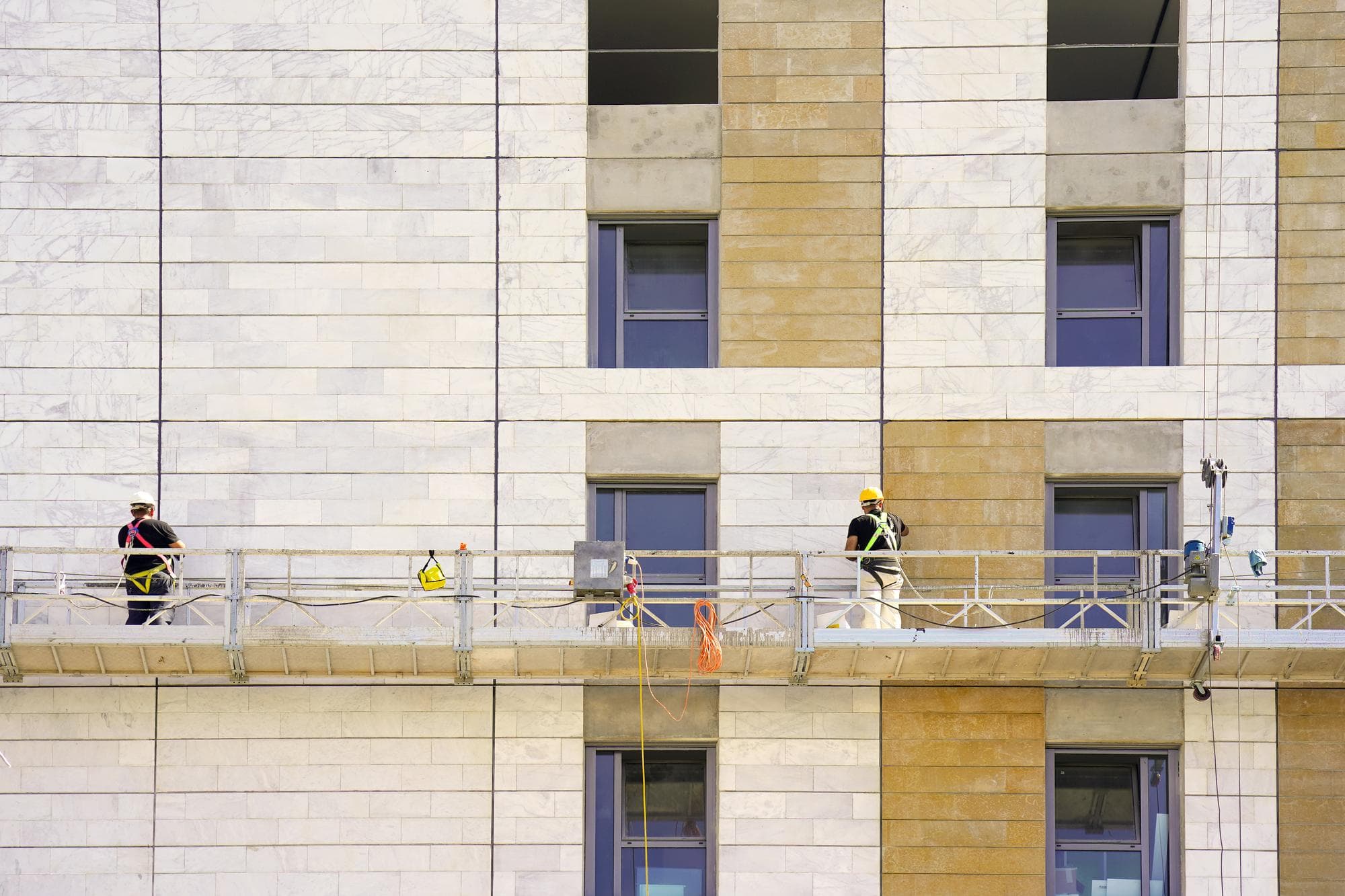
Small jobs involve only hand tools and bagged repair mortar while large programs require scaffold, swing stages, temporary fencing, engineer supervision and certification. When waterproofing membranes fail many committees choose to renew them during concrete repairs which significantly lifts the budget but extends the life of the building.
Factors that influence the final repair price
Extent is the prime driver. A balcony with one fist-sized spall costs little while a facade that whistles when the wind blows through cracks signals widespread damage. Height matters because scaffold hire and swing stage rigging fees rise sharply above six storeys. Balconies overlooking pool decks need crash decks to protect pedestrians. Coastal locations often necessitate marine grade coatings and stainless steel fixings. Engineers might specify sacrificial anodes or cathodic protection systems on severe sites which add upfront cost but reduce future maintenance.
Site access also plays a role. Busy beachfront towers with limited loading zones incur traffic control charges. Luxury buildings that insist on matching textured render or bespoke tiles face higher material costs. Certification fees arise under Queensland Building and Construction Commission regulations because structural repairs require a registered professional engineer to design and sign off the works. Finally inflation in the construction sector means that every year of delay typically adds about five percent to the programme budget.
Who pays in a body corporate setting
Queensland relies on the Body Corporate and Community Management Act 1997 which states that the body corporate must maintain common property in good and structurally sound condition. In buildings registered under a building format plan the structural elements including the external walls, balconies that form part of the boundary and the roof sit within common property. Consequently concrete cancer in those areas is usually a shared cost that the body corporate funds through the sinking fund or through a special levy if reserves fall short.
Lot owners become responsible when damage lies entirely within their lot and does not affect structural components or waterproofing that protects other lots. Decorative floor tiles inside the apartment or an owner-installed planter that cracks would normally fall to that owner. However if the planter sits on a slab that is common property and corrosion threatens the slab then the body corporate cannot avoid liability simply because a lot owner placed the planter.
Insurance rarely assists because most strata policies exclude gradual deterioration including concrete or brick cancer. An insurer may cover resultant damage from a one-off insured event such as storm impact but not the underlying defect. Committees therefore must rely on levies. Liability disputes sometimes arise in mixed-use schemes with complex exclusive use by-laws. In those cases an adjudication application under the BCCM Act or legal advice clarifies responsibility.
Practical next steps for committees and owners
Committees that suspect spalling should commission a qualified building consultant or structural engineer to prepare a concrete condition report. The report maps each defect location, tests carbonation depth and chloride level and recommends a repair methodology. With that independent scope the committee can invite competitive tenders from remedial contractors who specialise in concrete cancer. Contractor selection should consider licence class, past coastal projects, methodology and warranty length.
Parallel to scoping works the treasurer should review the capital works fund forecast. If the sinking fund does not hold enough cash the committee can consider a special levy or strata finance loan. Staging the project over several financial years may soften the impact but can extend scaffold hire costs. Members must balance cash flow against the reality that corrosion continues while decisions drag on.
During works the committee should appoint the engineer as superintendent to inspect breakout areas and sign each stage. Proper quality control ensures the contractor removes all contaminated concrete and treats every exposed bar. Cutting corners today almost guarantees a return of the problem within a decade.
Prevention and maintenance for coastal apartments
Prevention begins with a disciplined inspection regime. Visual facade surveys every second year and more detailed engineer inspections every five years catch early cracking. Sealant replacement at movement joints keeps water out of slab edges. Roof and balcony membranes need periodic re-topcoating according to manufacturer life expectancy. Pressure washing facades with low-chloride water removes salt deposits. Catching leaks quickly limits the duration that reinforcement stays wet.
Committees should allocate realistic allowances in the ten-year capital works plan for facade coating renewal. Modern elastomeric coatings slow carbonation and chloride ingress and give early warning when adhesion fails. Installing sacrificial anodes during minor repairs can also arrest future corrosion although owners must budget to replace the anodes at end of life.
When to call a specialist
Any fall of concrete from a height warrants immediate professional attendance for public safety. Exposed rusty reinforcement, cracks wider than a credit card, drummy areas larger than a dinner plate or water leaks that appear along internal slabs all justify an engineer review. Buyers considering a purchase in an older beachfront tower should engage a building consultant who understands concrete cancer and can view the body corporate records for past repair history and sinking fund balance. Early specialist involvement often shifts a potential million-dollar disaster into a manageable maintenance project.
Frequently asked questions
What causes concrete cancer in coastal apartments
Concrete cancer stems from moisture chloride salts and oxygen reaching the steel reinforcement which then rusts and expands cracking the concrete.
Is spalling the same as concrete cancer
Spalling is the visible breaking away of concrete while concrete cancer refers to the entire corrosion process that causes spalling.
How much does concrete cancer repair cost on the Gold Coast
Small patches start around one thousand five hundred dollars while significant structural repairs can range from five thousand to twenty five thousand dollars per location. Whole building programmes can reach several million.
Can concrete cancer repairs exceed fifty thousand dollars
Yes severe cases that require scaffold across multiple elevations or extensive balcony membrane replacement can exceed fifty thousand dollars per lot.
Who pays for concrete cancer in a body corporate
The body corporate usually pays when the damaged area is common property or structural. Lot owners pay when the damage is solely within their lot and not part of common property.
Is concrete cancer covered by insurance
Most strata insurance policies exclude gradual deterioration so the body corporate generally cannot claim for concrete cancer repairs.
Can the damage be only cosmetic
Sometimes early-stage spalling can appear cosmetic yet further investigation may reveal deeper corrosion. Professional testing determines the true condition.
What happens if the body corporate delays repairs
Delays allow corrosion to spread which increases repair scope cost and safety risk. Scaffold hire and inflation also push up the budget over time.
Does balcony waterproofing influence concrete cancer
Failed or aged membranes allow ponding water to reach the slab which accelerates corrosion. Upgrading waterproofing during repairs is essential for long term durability.
How often should a Gold Coast apartment building inspect for spalling
Visual checks every two years and comprehensive engineer assessments every five years provide a prudent balance between cost and risk for coastal buildings.
Final word
Concrete cancer remains a manageable problem when committees act decisively. Gold Coast apartment towers face aggressive marine exposure yet modern repair techniques and protective coatings can extend service life well beyond original design expectations. The key lies in early detection, clear scoping, adequate sinking fund planning and honest communication among owners about levy requirements. When everyone understands how the disease starts, what treatment costs and who is legally responsible, the scheme can preserve both safety and property values on Australia’s favourite strip of sand.