Gold Coast homeowners love fresh sea breezes and sunshine yet the same coastal humidity that feels so good on the skin can wreak havoc inside a bathroom. Moist air, daily hot showers and the occasional overflow spell trouble when waterproofing is anything less than first-rate. Australian Standard AS 3740 2021 sets the benchmark for keeping domestic wet areas dry and healthy. The National Construction Code requires every new build and renovation to follow either that standard or equally strict Deemed-to-Satisfy provisions. In Queensland the Queensland Building and Construction Commission layers on licensing, certificates and warranties that protect owners well into the next decade. This guide explains in plain language exactly how the rules work, why they matter on the Gold Coast and what you should see on your own project before a single tile is laid.
Understanding AS 3740 and its role in Gold Coast bathrooms
AS 3740 2021 Waterproofing of domestic wet areas is the national technical rulebook for bathrooms, ensuites, laundries and toilets in houses and apartments. It sets minimum performance levels for membranes, bond breakers, junctions, wall heights and floor gradients so that water never escapes the wet zone and damages timber frames, plasterboard or neighbouring units. The standard is referenced by the National Construction Code 2022. When a builder chooses the Deemed-to-Satisfy pathway the easiest way to satisfy the Code is to construct the wet area exactly as AS 3740 specifies.
Gold Coast properties must also comply with the Queensland Development Code and local City of Gold Coast approval requirements, but neither of those documents changes the technical figures in AS 3740. Instead they confirm that the work must be completed by a QBCC licensed waterproofer, inspected where required by a building certifier and backed by a statutory structural warranty of six years and six months.
Core requirements every homeowner should know
The numbers hold the key. A bathroom is only as sound as the membrane hidden beneath the tiles. AS 3740 tells installers how far to run that membrane and how steep the floor must fall toward the waste so that ponding never occurs. The most common figures are gathered in the table below. Keep this handy when walking through your own renovation.
| Wet area element | Minimum waterproofing coverage | Gradient toward floor waste |
|---|---|---|
| Shower floor (enclosed or unenclosed) | Entire floor within shower space including hobs or step-downs | Between 1 in 80 and 1 in 50 |
| Shower walls | Up to 1800 millimetres above finished floor level or 50 millimetres above shower rose whichever is higher | Not applicable |
| Walls adjacent to baths or spas | At least 150 millimetres above the lip of the fixture | Not applicable |
| Wall to floor junctions outside shower | At least 100 millimetres up the wall | Floor outside shower 1 in 100 when a waste is present |
| Bathroom floors on upper levels or timber substrates | Full floor area plus 100 millimetres up all perimeter walls | 1 in 100 or as required to direct water to waste |
Every junction where two surfaces meet must be treated with a flexible bond breaker so that seasonal movement cannot tear the membrane. All pipe penetrations mixers and recesses must receive the same continuous film. The standard gives installers freedom to use liquid-applied or sheet systems yet whichever system is chosen it must hold a current test report to AS NZS 4858 demonstrating durability.
Changes introduced in AS 3740 2021 and why they matter
The 2021 edition replaced the 2010 text and introduced tighter rules in three main areas. First it extended mandatory waterproofing on shower walls to the full 1800 millimetres or showerhead plus 50 millimetres height whichever is greater. Many older bathrooms stop short at 150 millimetres above the shower arm leaving plasterboard unprotected higher up. Second it clarified floor gradients. Past guidance spoke of falls in general terms. The current wording locks installers into a range no flatter than 1 in 80 and no steeper than 1 in 50 within a shower. This ensures soapy water drains quickly without creating a hazardous slope underfoot. Third it recognises that the membrane itself must be graded when installed under a screed or tile bed that is intended to drain to a waste. That avoids trapped moisture beneath tiles, a common hidden failure.
Gold Coast owners renovating bathrooms constructed before 2021 often discover the walls carry only partial waterproofing or the floor slope is too shallow. Upgrading to the new requirements during a renovation provides peace of mind and aligns the work with current insurance expectations.
How the standard links with the National Construction Code and Queensland rules
The National Construction Code Volume Two Housing Provisions sets a performance requirement labelled H4P1. In short the bathroom must prevent unhealthy conditions and building damage from water release. The Code offers two clear compliance routes. Follow the prescriptive words in Part 10.2 of the Housing Provisions or adopt AS 3740 2021. Most builders and certifiers choose the latter because it is already familiar across trades and product suppliers.
Queensland adopts the National Construction Code unchanged for wet areas but adds consumer safeguards. Any person who installs, repairs or designs a waterproof membrane as part of building work must hold a QBCC waterproofing licence. The licensee issues a Form 16 or similar certificate confirming the membrane complies with AS 3740 and relevant manufacturer instructions. The certificate becomes part of the building approval file and is vital when selling the home or claiming on insurance.
Practical application across typical Gold Coast home types
Slab on ground houses
Many parts of the Gold Coast feature single level homes on concrete slabs. Where the bathroom sits directly on the ground the standard still demands full waterproofing of the shower recess, membrane upturns at least 100 millimetres and sealed junctions. The remainder of the bathroom floor does not always need full coverage in a ground level situation yet many contractors recommend it because the extra square metres add small extra cost compared with potential leak repairs years later.
Two storey timber framed homes
Upper level bathrooms present a higher risk. Water that bypasses the membrane can seep through timber flooring, ceiling linings and lighting to rooms below. AS 3740 states that when a bathroom floor is made from timber or sits above another storey the installer must coat the entire floor area. The membrane then turns up every wall at least 100 millimetres before continuing to the full 1800 millimetres in the shower. Builders often install compressed fibre cement sheets as a stable base because ordinary plywood lacks long-term moisture stability.
Apartments and townhouses
High-rise living is popular from Southport to Burleigh Heads. In strata buildings any leak from a private lot can damage common property and neighbouring units. Because the risk profile is even sharper most body corporate managers insist on waterproofing certificates and sometimes photographs taken during application. For owners that means hiring a QBCC licensee is non-negotiable. Failure to do so could leave the owner liable for six figure repair bills if water travels through multiple levels.
A walk through of a compliant waterproofing project
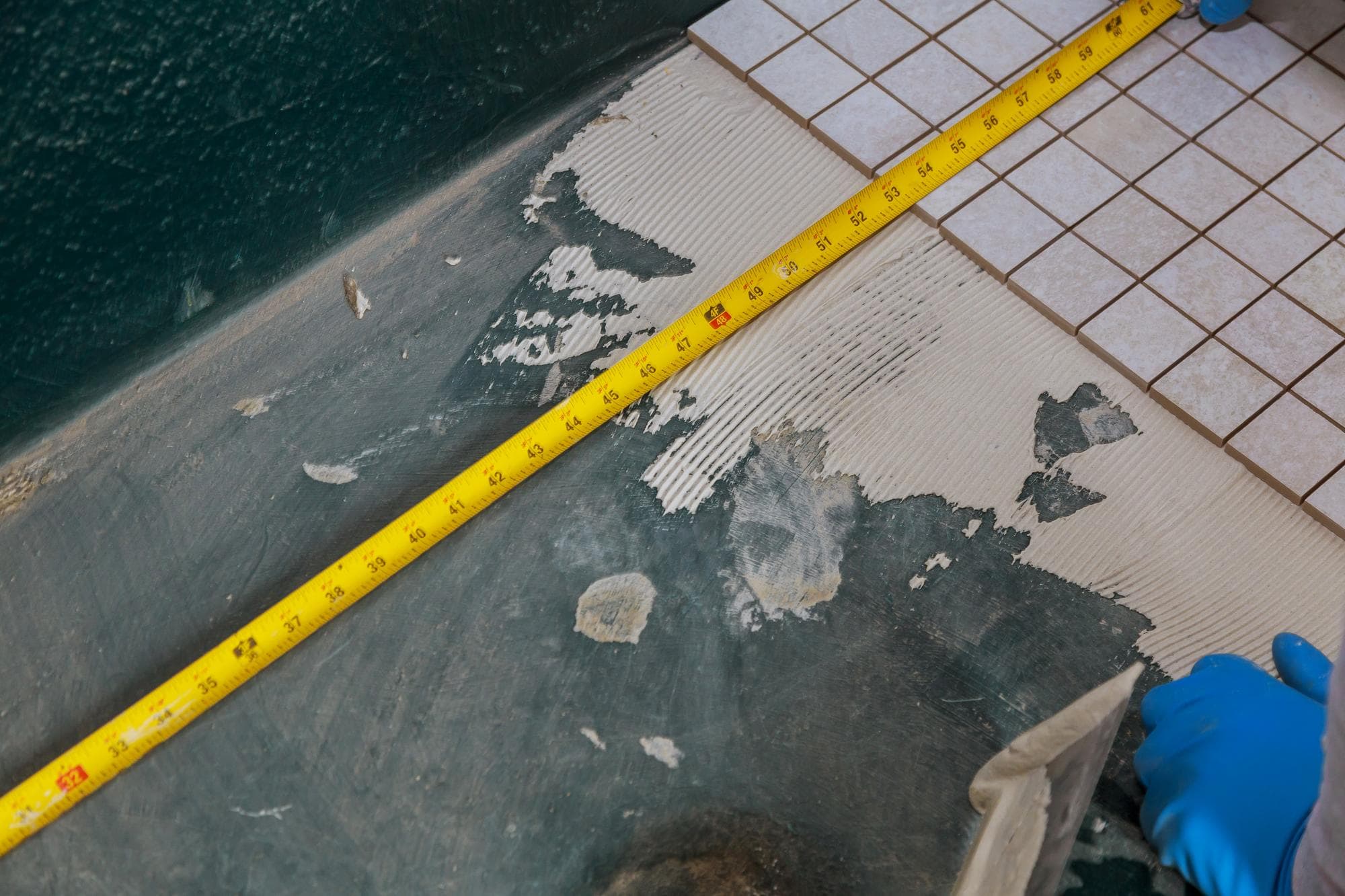
Every successful job follows six logical stages even if the project appears small. The first stage is substrate preparation. Installers check that concrete is fully cured, timber sheeting is securely fixed and all surfaces are free of dust or laitance. Next comes bond breaker installation at every junction, penetrations and movement joint. A high quality flexible tape or neutral cure silicone provides the necessary stretch. The third step is the first membrane coat, carefully brushed into corners then rolled across broad surfaces. After adequate flash-off time a second coat is applied at right angles to produce uniform thickness verified with a wet film gauge. The membrane must extend to the heights listed earlier, wrap over hob tops and cover shower seat surfaces if installed.
Stage four is curing. Liquid membranes need time and correct temperature to polymerise fully. Rushing to tile too early is a leading cause of pinholes and debonding. Stage five is flood testing. Installers plug the waste, fill the shower base with water to a set level and leave it for at least twenty four hours. Any drop in level or visible damp patch under the floor signals a failure that must be addressed before finishing proceeds. Only after passing the test and issuing compliance documentation does the tiler start bedding screeds and installing tiles.
How to confirm your bathroom actually meets the rules
Homeowners do not need technical degrees to spot the tell-tale signs of proper practice. Ask the contractor for the product data sheet showing that the chosen membrane has an AS NZS 4858 classification. Confirm that the walls inside the shower recess are evenly coloured with dry membrane up to eye level. Run a straightedge across the floor toward the drain. You should see a consistent fall with no flat points. At the doorway check for a water stop angle under the tile bed, an often overlooked barrier that prevents spill water tracking into the hallway.
During construction take date-stamped photographs once the second coat has cured. Those images become valuable evidence if a later insurance claim alleges faulty workmanship. When the work is complete store the compliance certificate and receipts in the same folder as your plumbing approvals and waterproofing warranty. This simple paperwork habit can save weeks of dispute down the track.
The risks of ignoring the standard
Water is patient. A pinhole behind a mixer body can take months to produce a stain yet by the time the damage shows the concealed framing may already host mould or termites. In apartments the first warning often arrives from a neighbour below who notices a ceiling blister. Insurers investigate and quickly ask for proof of compliance. When no certificate exists or the installer had no QBCC licence the claim can be rejected, leaving the owner responsible for structural repairs, retiling and alternative accommodation costs.
During resale building inspectors carry moisture meters and thermal cameras. Bathrooms that record high readings on their scan encourage buyers to negotiate a hefty discount or walk away. Rectification after tiling is complete requires full demolition back to framing because membranes cannot be reliably patched once buried under adhesion and grout. Industry estimates place the average bathroom rectification at several times the cost of getting it right the first time.
DIY versus licensed professionals on the Gold Coast
Do-it-yourself projects can feel rewarding yet bathroom waterproofing is rarely a safe arena for experimentation. Queensland treats the work as restricted building activity for good reason. A licensed professional invests in regular training, carries suitable insurance and knows the subtle differences between membranes suited to dense concrete versus lightweight sheeting. The licensee also carries out or arranges flood testing and signs legally recognised certificates. An owner who ignores that pathway assumes direct liability for any future loss resulting from leaks. Some suppliers even void product warranties if the installer cannot quote a QBCC licence number.
That said a proactive homeowner can still play a valuable role. You can discuss membrane brand choices, request daily progress photos and verify that cure times are observed. Collaboration with an experienced contractor delivers the best possible outcome.
Bringing your bathroom project into compliance
Start by planning early. Engage a designer or builder who is familiar with AS 3740 2021 from the concept stage. Submit building approval documents to a private certifier or City of Gold Coast building team if the renovation changes room size, adds a new drainage point or modifies the structural layout. Select a waterproofing contractor who can show a current QBCC licence card. Request a written scope that references the standard line by line, including wall heights, floor gradients and flood test procedure. Schedule the job so that the membrane cures thoroughly before the tiler arrives. Finally keep final certificates, photographs and product warranties together with your house plans.
Frequently asked questions
What is AS 3740 in simple terms
It is the Australian Standard that spells out how to keep water inside showers, baths, laundries and toilets so the structure never rots or grows mould.
How high do shower walls need waterproofing
The membrane must reach at least one thousand eight hundred millimetres above finished floor level or fifty millimetres above the height of the showerhead, whichever measurement sits higher on the wall.
Do all bathroom floors need a membrane
Every shower floor must be fully coated. The rest of the bathroom floor must be coated when it sits on timber, above another storey or when the design carries a floor waste in the main area. On ground level concrete slabs without a waste only the perimeter upturns may be mandatory yet full coverage is considered best practice.
What slope is required toward the drain
Shower floors must fall at least one in eighty and not more than one in fifty. Outside the shower a one in one hundred slope is typical when a waste is present.
Does the standard apply to small repairs
Yes. Whenever you disturb or replace tiles in a wet area the exposed surface must be waterproofed to the current version of AS 3740 before the area is closed again.
Can I waterproof my own bathroom if I am handy
In Queensland you need a QBCC waterproofing licence to legally install or substantially repair a membrane as part of building work. Without that licence you risk fines, loss of insurance cover and expensive future repairs.
What paperwork should I receive at completion
Expect a waterproofing certificate or Form 16 signed by the licensee, a product warranty from the membrane manufacturer and a copy of any flood test record.
What happens if the work fails inspection
The building certifier will issue a direction to rectify. The area remains unfinished until a licensed party corrects the defects and new certificates are supplied. This can delay tiling and completion schedules.
Has AS 3740 changed recently
Yes. The 2021 edition expanded wall coverage in showers, confirmed definite floor fall ranges and required membranes themselves to shed water toward the waste rather than allowing puddling under tiles.
Conclusion
Waterproofing is the hidden hero of every Gold Coast bathroom. The salt air, subtropical storms and busy household schedules mean every square centimetre of wet area needs reliable defence. AS 3740 2021 backed by the National Construction Code provides that defence when implemented by a licensed professional. Understanding the heights, falls, bond breakers and certification process empowers homeowners to demand quality. Invest in correct membrane installation today and your bathroom will stay fresh, healthy and leak free for decades to come.